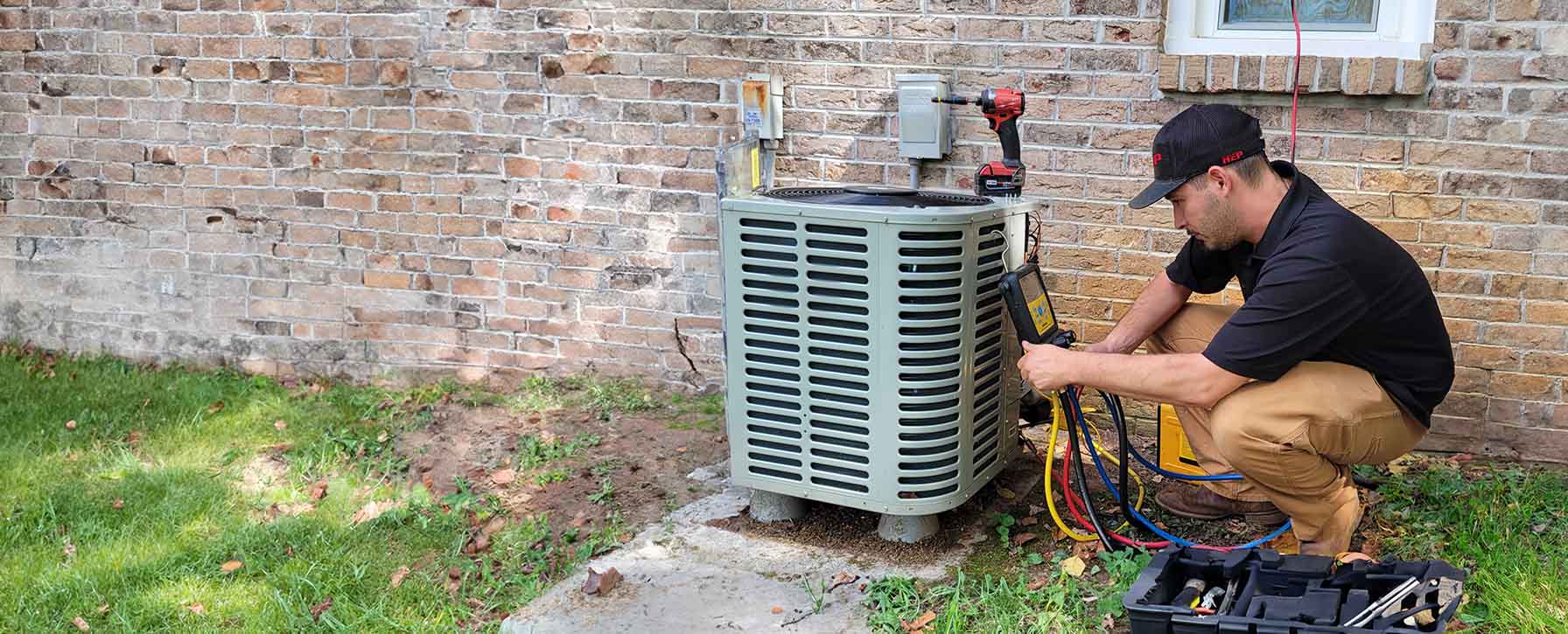

Dehumidifier Installation
Your trusted partner for professional home services. Quality workmanship, guaranteed satisfaction.

Dehumidifier Installation | Heating and Air Conditioning | Lenoir City
Looking to enhance the comfort of your Lenoir City home? HEP's heating and air conditioning experts offer top-notch dehumidifier installation services that can make your indoor environment more enjoyable and healthier. Our team understands the unique climate challenges of East Tennessee and provides tailored solutions to balance humidity levels, preventing mold growth, reducing allergens, and protecting your home's structure. With professional, swift installation and unbeatable customer care, HEP ensures you're left with a comfortable, humidity-free living space. Say goodbye to sticky, damp conditions and hello to fresh, clean air with HEP!
What Our Customers Say


The Importance of Professional Dehumidifier Installation in Lenoir City
Life in Lenoir City delivers picturesque lake views, rolling hills, and a climate that shifts from humid summers to damp winters. That humidity can creep into crawl spaces, basements, and even conditioned living areas, leading to musty odors, mold growth, and uncomfortable indoor air. Partnering with a seasoned heating and air conditioning contractor such as HEP for whole-home or crawl-space dehumidifier installation is the most reliable way to keep moisture in check and protect both indoor air quality and structural integrity.
Humidity Challenges Unique to the Tennessee Valley
Lenoir City sits at the junction of the Tennessee River and the Clinch River, a location that naturally intensifies local moisture levels. Temperatures frequently rise above the 80-degree mark from late spring through early fall, and the subtropical influence means high dew points almost year-round. Indoor spaces that are poorly ventilated or inadequately conditioned can hover above 60% relative humidity for long stretches.
Left unchecked, that level of moisture becomes more than a mild inconvenience:
- Mold spores flourish on drywall, carpet padding, and insulation
- Wood joists, subfloors, and framing absorb water vapor, leading to rot or warping
- Dust mites multiply rapidly, aggravating allergies or asthma
- Air conditioning units work harder to remove latent heat, driving up energy bills
Why Air Conditioners Alone Are Not Enough
Standard air conditioning equipment does remove some moisture, but it is not engineered to control humidity as its primary function. The coil temperature must drop below the dew point to condense water vapor, yet oversizing or short cycling can prevent that coil from remaining cold long enough to do the job. A dedicated dehumidifier installed by HEP complements the HVAC system, focusing specifically on moisture removal so that the air conditioner can perform at its most efficient capacity.
Signs Your Lenoir City Home Needs a Dehumidifier Installed by HEP
Not every home experiences the same moisture problems, but several indicators point strongly to the need for professional intervention:
- Persistent musty smells emanating from closets, laundry rooms, or lower levels
- Condensation on window panes or damp spots on drywall
- Warping wood floors or doors that swell and stick
- Visible mold growth, especially on baseboards or behind furniture
- High indoor humidity readings above 55–60% on hygrometers
- Frequent respiratory irritation among household members
When these tell-tale symptoms appear, an HEP technician can perform a thorough moisture assessment, isolating sources of water vapor and recommending the correct unit size and placement to suit the home’s unique construction.
How Dehumidifiers Integrate with Heating and Air Conditioning Systems
Stand-Alone vs. Whole-Home Dehumidifiers
- Stand-Alone Portable Units
- Small capacity (25–50 pints/day)
- Designed for single rooms or temporary use
- Require manual emptying of water reservoirs
- Whole-Home Dehumidifiers
- Large capacity (70–130+ pints/day)
- Hard-ducted into the existing HVAC or crawl space
- Automatic drainage to a condensate pump, sump, or gravity line
- Controlled by onboard or wall-mounted humidistats
HEP focuses on installing whole-home or crawl-space dehumidifiers because they deliver consistent, energy-efficient moisture control for the entire building envelope instead of isolated areas.
Operational Basics
A dehumidifier pulls warm, moist air across a refrigerated coil, causing water vapor to condense into a liquid that is then routed to a drain. The cooled, now-dry air passes across a condenser coil and is reheated slightly before being circulated back into the supply plenum or the crawl space. Integrated humidistats monitor relative humidity and signal the unit to cycle on or off to maintain setpoint levels.
Compatibility with Existing HVAC Equipment
HEP technicians verify:
- Airflow requirements so static pressure remains within manufacturer guidelines
- Return and supply duct sizing to prevent short-circuiting
- Electrical load capacity at the main panel to handle the additional amperage
- Drainage routes to ensure gravity fall or pump lift meets code
By conducting these checks, the installation adds moisture control without compromising heating or cooling performance.
Types of Dehumidifiers HEP Installs in Lenoir City
Crawl-Space Dehumidifiers
Crawl spaces often sit directly over exposed earth, creating a constant source of ground moisture that wicks into joists and subfloors. HEP uses low-profile, horizontal dehumidifier models engineered for tight clearances. Vapor-barrier liners and sealed foundation vents often accompany these units, creating a controlled environment that protects the home from the bottom up.
Whole-Home Ducted Dehumidifiers
For finished basements, two-story homes, or open-concept designs, HEP selects ducted dehumidifiers that tie into the main return or supply trunk. Air can also be routed from humid zones such as bathrooms or laundry rooms directly into the dehumidifier’s intake, creating focused moisture removal where it is needed most.
High-Capacity Light Commercial Units
Some Lenoir City properties—vacation rentals, detached workshops, or home offices—have square footage or occupancy levels that stretch the limits of residential equipment. HEP can specify light commercial dehumidifiers offering 130–220 pints per day, ensuring proper control without sacrificing efficiency.
HEP’s Step-by-Step Dehumidifier Installation Process
1. Moisture and Load Calculation
Before any equipment is selected, HEP takes readings of:
- Indoor and outdoor humidity
- Temperature differentials across the envelope
- Cubic footage of conditioned space
- Infiltration rates from doors, windows, and penetrations
This data is fed into ACCA Manual J and industry-standard software, ensuring that capacity aligns with real-world moisture loads rather than guesswork.
2. Equipment Selection and Placement Planning
HEP balances:
- Pint-per-day extraction capability
- Energy factor and power draw
- Physical footprint for serviceability
- Compatibility with existing ductwork
Strategic placement helps avoid long duct runs and maximizes static pressure utilization.
3. Mechanical Integration
Using sheet-metal fabrication tools, technicians create airtight collars and transition pieces connecting the dehumidifier to returns or dedicated supply trunks. Mastic sealant and mechanical fasteners prevent leakage that could otherwise reintroduce humid air.
4. Electrical and Control Wiring
A dedicated circuit breaker may be installed if panel capacity requires. Low-voltage wiring ties the dehumidifier-mounted humidistat to the central thermostat or an independent wall control, giving homeowners flexibility over setpoints.
5. Drainage Solutions
Options include:
- Gravity drains sloped 1/8-inch per foot to exterior or sump
- Condensate pumps with float-switch safeguards
- Integration with existing HVAC condensate lines when code allows
Technicians test flow to guarantee no standing water remains.
6. Commissioning and Homeowner Orientation
Final steps include:
- Calibration of humidistat setpoint, typically between 45–50% RH
- Verification of amperage draw and refrigerant pressures
- Airflow testing with manometers to confirm design static pressure
- Demonstration of filter access, periodic cleaning, and unit reset procedures
Long-Term Benefits of an HEP Dehumidifier Installation
Health-Focused Advantages
- Reduces presence of allergens such as dust mites and mold spores
- Minimizes respiratory discomfort and skin irritation
- Discourages musty odors that can indicate microbial growth
Structural Protection
- Keeps wood framing, hardwood floors, and cabinetry at optimal moisture content
- Limits corrosion on plumbing and HVAC components
- Preserves paint, wallpaper, and drywall from blistering or peeling
Energy Efficiency Synergy
Maintaining target humidity allows thermostats to sit a few degrees higher in summer while still feeling cool, reducing compressor runtimes. Additionally, the air conditioner no longer bears the full burden of latent heat removal, extending equipment life.
Comfort Improvements
- Eliminates clammy sensations often felt at lower thermostat settings
- Prevents fogged-up windows and cold surfaces
- Provides more consistent climate control across multiple floors
Choosing the Correct Size Dehumidifier for Your Property
A common misstep is assuming bigger invariably means better. Oversized dehumidifiers short cycle, failing to complete proper moisture extraction while wasting energy. Conversely, undersized units run continuously without achieving setpoint. HEP’s sizing protocol factors in:
- Total conditioned square footage
- Number of occupants and daily activities (cooking, showering)
- Basement or crawl-space exposure
- Seasonal weather patterns specific to Lenoir City
Load calculations confirm whether a 70-pint model suffices or if a 98-pint or 130-pint option is justified.
Integration With Advanced Indoor Air Quality Solutions
Compatible Upgrades
- MERV 13–16 Filtration Racks
- Ultraviolet Germicidal Lights
- Energy Recovery Ventilators (ERVs)
- Smart Thermostats with Remote Humidity Sensing
A dehumidifier forms the backbone of an integrated IAQ strategy, and HEP coordinates these add-ons to create a balanced, healthy environment.
Routine Maintenance After Installation
Although whole-home dehumidifiers are largely automatic, minor upkeep ensures reliable long-term performance:
- Replace or rinse intake filters every three to six months
- Inspect drain lines for algae buildup or blockages
- Verify humidistat calibration annually
- Clean evaporator and condenser coils with manufacturer-approved solutions
- Confirm refrigerant charge during seasonal HVAC tune-ups
HEP technicians can bundle these tasks within a broader heating and air conditioning maintenance agreement, streamlining service visits.
Seasonal Operation Tips for Lenoir City Homeowners
Spring
- Set humidistat to 50% as temperatures begin to rise
- Clear vegetation or stored items away from crawl-space vents or dehumidifier intake
Summer
- Drop setpoint slightly (45–48%) during extended rainy spells
- Monitor indoor hygrometer readouts in upper levels where heat stacks
Fall
- Raise setpoint to 50–55% when outdoor humidity declines, preventing overly dry air once heating begins
- Inspect gutters and downspouts to minimize water infiltration
Winter
- If basement humidity falls below 40%, temporarily disable the unit to avoid static issues, then reactivate when conditions warrant
- Confirm drainage lines remain unfrozen, particularly in unconditioned areas
The HEP Difference for Heating, Air Conditioning, and Dehumidifier Solutions
Local Expertise
Technicians understand how lake-effect weather patterns and valley geography affect moisture migration. That practical knowledge translates into precise equipment choices tailored to Lenoir City home designs, from historic cottages to new-construction estates.
Comprehensive Training
HEP’s installers hold certifications from recognized organizations in the HVAC and building science community. Continuous education keeps staff current on evolving dehumidifier technologies, refrigerant regulations, and energy codes.
Quality Materials
- Insulated flex and rigid-metal ducts rated for low leakage
- Oversized drain hoses with antimicrobial linings
- 20-gauge sheet-metal plenums to reduce vibration and noise
Detailed Documentation
Homeowners receive:
- AHRI performance data for the installed model
- Wiring schematics for future service reference
- Maintenance log templates and recommended visit intervals
Service Areas Around Lenoir City
While the core service footprint centers on Lenoir City proper, HEP crews routinely deploy to surrounding communities, including but not limited to:
- Tellico Village
- Loudon
- Philadelphia (TN)
- Greenback
- Farragut
- West Knoxville suburbs
The company’s dispatch model groups nearby appointments, ensuring prompt response while minimizing travel emissions.
What to Expect the Day of Installation
- Arrival within the scheduled window with fully stocked service vehicles
- Protective floor coverings and shoe covers used throughout work zones
- Real-time updates as duct connections, wiring, and drainage are completed
- Thorough cleanup of packaging materials, sheet-metal scraps, and insulation
- Hands-on walkthrough showing filter location, control interface, and maintenance landmarks
Myths About Dehumidifiers Debunked
-
“Running a dehumidifier makes the house feel colder.”
In reality, lower humidity allows occupants to feel comfortable at slightly higher thermostat settings, often leading to energy savings. -
“Opening windows solves moisture problems.”
Lenoir City’s outdoor humidity frequently exceeds indoor levels; bringing exterior air inside can compound the issue. -
“Crawl-space liners alone are enough.”
Vapor barriers block ground moisture but cannot remove existing water vapor or address seasonal infiltration without active mechanical drying.
Environmental Considerations
Modern dehumidifiers use eco-friendly refrigerants with lower global warming potential. Variable-speed fans and smart controls modulate output, extracting only as much moisture as necessary. By pairing dehumidification with efficient heating and air conditioning practices, HEP helps homeowners shrink carbon footprints while enhancing comfort.
Common Moisture Sources Targeted During Installation
- Earth-to-air diffusion in vented crawl spaces
- Capillary action through unsealed foundation walls
- Water vapor generated by showers, cooking, and laundry
- Infiltration via recessed light fixtures, attic hatches, and rim joist gaps
- Seasonal flooding or high water tables affecting basements
HEP’s holistic approach addresses these contributors concurrently, ensuring the dehumidifier is not masking an underlying structural issue.
Preparing Your Home for a Dehumidifier Installation
- Clear a 4-ft by 6-ft workspace near the HVAC air handler or crawl-space access
- Relocate storage boxes, seasonal décor, or equipment that could obstruct technician pathways
- Identify electrical panel location to expedite breaker installation if necessary
- Provide information regarding prior moisture mitigation steps (sump pumps, French drains, etc.)
Monitoring Success After the Work Is Done
HEP recommends a simple three-point check over the first month:
- Confirm condensate flow daily for the first week, then weekly thereafter
- Record relative humidity readings each evening at the same time
- Watch for odor reduction and subjective comfort improvements
Steady humidity between 45–50% accompanied by drier smells and reduced window condensation indicates the system is performing properly.
Complementary Solutions for Total Home Performance
- Sealing and insulating ductwork to reduce air leakage
- Upgrading attic insulation to R-38 or higher
- Installing smart vents or zoning dampers for balanced airflow
- Employing air sealing around sill plates and rim joists with spray foam
Each enhancement amplifies the effects of a professionally installed dehumidifier and supports the overall HVAC system.
Future-Proofing Your Investment
Dehumidifier technology now includes features like Wi-Fi diagnostics, modulating compressors, and automatic defrost. HEP selects models with firmware upgrade capability, ensuring homeowners can integrate upcoming smart-home functionalities without replacing hardware.
Key Takeaways on Moisture Control and HEP’s Role
- Dehumidification is indispensable for the high-humidity climate of Lenoir City
- Professional sizing and installation prevent common pitfalls that diminish performance
- Health, comfort, and energy efficiency all rise when humidity remains in the optimal 45–50% range
- HEP’s comprehensive process—from load calculation to commissioning—delivers reliable, long-lasting results that integrate seamlessly with existing heating and air conditioning systems
Proudly Serving Our Community
Find your local experts in your neighborhood. We're just around the corner.