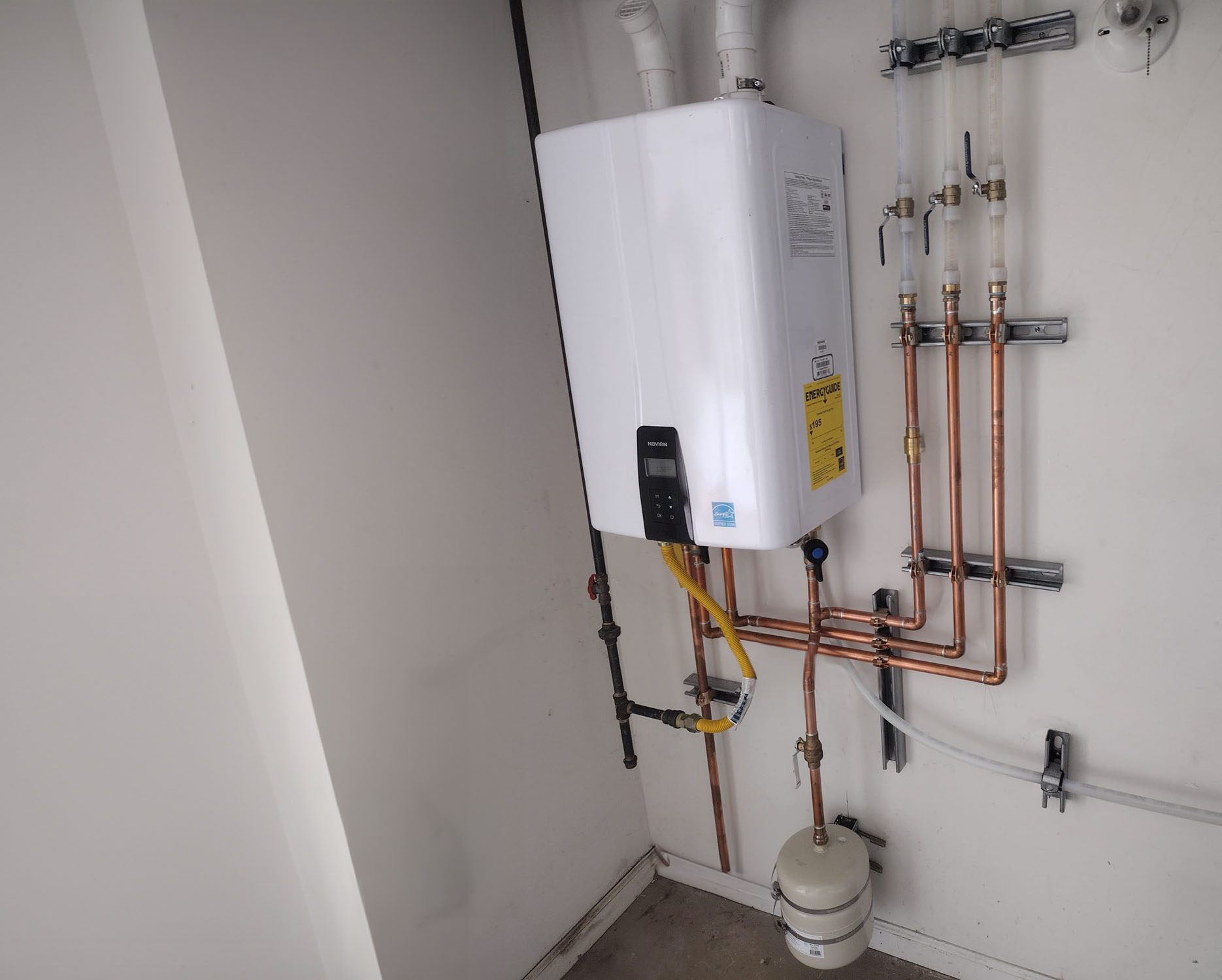

Tankless Water Heater Install
Your trusted partner for professional home services. Quality workmanship, guaranteed satisfaction.

Tankless Water Heater Install | Plumbing | Farragut
Discover the unmatched efficiency and endless hot water that a tankless water heater provides, installed by HEP's experienced plumbers in Farragut. Say goodbye to bulky tanks and hello to sleek, space-saving designs that deliver hot water on demand. Our team ensures a seamless installation process, optimizing your home's energy use while providing you with a fast, reliable hot water source. Trust HEP to bring innovation and comfort to your home with our top-notch tankless water heater installation services. Transform your daily routines with the convenience and eco-friendliness you deserve.
What Our Customers Say


Tankless Water Heater Install Experts in Farragut
Modern households in Farragut increasingly rely on tankless water heaters to meet daily hot-water demands without wasting energy or valuable floor space. HEP’s licensed plumbers specialize in the design, installation, and fine-tuning of these compact systems, delivering hot water on demand while reducing operational costs and extending equipment longevity. By combining extensive plumbing experience with deep product knowledge, the HEP team tailors every tankless water heater install to the unique layout, occupancy, and lifestyle habits of each client’s property.
Understanding Tankless Technology
A tankless water heater—also called an on-demand or instantaneous water heater—operates without a storage tank. Cold water travels through a heat exchanger that activates only when a hot-water tap opens. This key distinction eliminates standby heat loss, a common inefficiency in traditional storage-tank models. The process is governed by flow sensors and modulating gas burners or electric elements that react within seconds to the water draw, ensuring a consistent, tailored temperature.
Quick technical snapshot:
- Heat output is measured in British Thermal Units (BTUs) for gas models or kilowatts (kW) for electric units.
- Flow rate is expressed in gallons per minute (GPM), typically ranging from 2.5 GPM for point-of-use models to 11 GPM for whole-home solutions.
- High-efficiency condensing units reclaim latent heat from exhaust gases, pushing Uniform Energy Factor (UEF) ratings well above 0.90.
Why Homeowners in Farragut Choose Tankless
HEP observes a consistent trend: property owners want energy efficiency, unlimited hot water, and a minimal equipment footprint. Tankless systems excel in these areas, addressing longstanding limitations of tank-based heaters.
Energy Efficiency Benefits
Water is heated only when needed, preventing standby heat loss. This can translate into double-digit percentage reductions on annual utility expenses for an average Farragut household. HEP’s installers calibrate each unit to local water chemistry and incoming groundwater temperatures—an essential step in maximizing operating efficiency.
Additional efficiency perks include:
- Sealed combustion in gas units minimizes heat escape.
- Electric elements modulate, rather than operate at full blast.
- Condensing technology recycles exhaust heat.
Endless Hot Water Convenience
Traditional tanks deplete after a set volume, whereas tankless units deliver a continuous flow—ideal for families running back-to-back showers, laundry, and dishwashing. By matching the unit’s GPM rating to simultaneous fixture demand, HEP ensures comfort without system overload.
HEP’s Comprehensive Plumbing Approach
Proper tankless water heater performance depends on meticulous planning and precise installation. HEP follows a structured methodology that aligns with local codes and manufacturer specifications.
Initial Assessment and Load Calculation
A certified plumber evaluates the home’s fixture count, peak hot-water demand periods, and historical utility patterns. Load calculations consider:
- Number of full bathrooms
- Kitchen appliances drawing hot water
- Utility sink or outdoor shower connections
- Desired rise in water temperature over incoming supply
Selecting the Ideal Unit
Based on assessment data, HEP recommends units with balanced capacity and efficiency. Considerations include:
- Fuel source availability (natural gas, propane, or electric)
- Required GPM at target temperature rise
- Venting path options for combustion gases
- Integration with recirculation loops if continuous hot water at fixtures is a priority
Professional Installation Process
- Isolate water, gas, or electrical service lines.
- Remove obsolete tank equipment while mitigating spillage.
- Retrofit or upsize gas lines, or install dedicated electrical circuits.
- Mount the tankless unit on fire-rated backing within manufacturer-specified clearances.
- Install stainless-steel or PVC venting for gas models, ensuring positive drainage of condensate.
- Purge air from water lines, leak-test connections, and commission the burner or elements.
Post-Installation Optimization
HEP’s technicians finalize the setup by:
- Programming temperature settings based on occupant preferences
- Performing a combustion analysis on gas units
- Verifying flame pattern or element amperage draw
- Documenting serial numbers for warranty registration
Common Locations for Tankless Water Heater Installations
Farragut’s diverse property types influence where and how a tankless system is best positioned. HEP’s plumbers select a spot that balances code compliance, convenience, and performance.
Single-Family Homes
Space savings are especially welcome in utility closets, garages, or unfinished basements, liberating square footage for storage or living upgrades.
Townhouses and Condominiums in Farragut
Shared walls call for compact solutions with sealed combustion. Indoor units reduce exterior venting while maintaining neighborhood aesthetics.
Commercial Properties Requiring On-Demand Hot Water
Small businesses—coffee shops, salons, and professional offices—benefit from wall-hung tankless units that provide consistent hot water and free up floor space for revenue-generating equipment.
Key placement factors:
- Proximity to high-demand fixtures
- Adequate make-up air for combustion
- Accessible condensate drain lines
Signs You Need to Upgrade to Tankless
Recognizing the tipping point between repairing a tank heater and upgrading builds a compelling case for tankless adoption.
Inconsistent Water Temperatures
Fluctuating hot-water delivery often signals sediment buildup or failing thermostats within a storage tank. An on-demand unit sidesteps these issues by heating water only as it flows.
Rising Utility Bills
Escalating energy costs, particularly during off-season periods of low usage, suggest standby losses. Tankless heaters eliminate this waste.
Limited Space for Equipment
Remodels that reclaim a mechanical closet or convert a basement into living space motivate residents to switch to wall-mounted tankless options.
Preparing Your Farragut Home for Tankless Installation
A seamless transition depends on aligning existing infrastructure with the performance demands of a high-efficiency appliance.
Plumbing Infrastructure Considerations
- Pipe diameter must accommodate higher flow rates.
- Isolation valves facilitate future maintenance.
- Pipe insulation preserves temperature and reduces condensation.
Venting Requirements
Gas tankless models require Category III or IV venting, which withstands acidic condensate. HEP’s plumbers evaluate horizontal and vertical vent runs while confirming clearance from windows or soffits to satisfy building codes.
Gas Line or Electrical Upgrades
Large loops of copper or CSST piping are sometimes necessary to meet BTU demands. Electric models may need upgraded service panels and dedicated breakers. HEP coordinates any sub-trade if structural drilling or panel work is required.
Environmental Impact of Tankless Water Heaters
Beyond comfort and efficiency, tankless systems contribute to sustainability objectives in Farragut.
Lower Carbon Footprint
Condensing gas units extract heat from flue gases that would otherwise be wasted. This, combined with reduced fuel consumption, lowers greenhouse-gas emissions.
Water Conservation Advantages
Shorter wait times at faucets and recirculation pumps calibrated by HEP curtail unnecessary water flow, conserving thousands of gallons annually.
Maintenance Tips Provided by HEP
Proper upkeep protects warranty coverage and extends equipment life well past the average tank heater’s timeline.
Routine Flushing and Descaling
Hard-water minerals precipitate inside heat exchangers over time. HEP trains homeowners to:
- Attach hoses to isolation ports
- Flush with vinegar or manufacturer-approved solution
- Rinse until clear water exits
Annual Performance Check
An annual inspection by a licensed HEP plumber confirms combustion efficiency, checks for gas leaks, and validates electronics firmware. Early diagnostics mitigate unexpected downtime.
Other recommended tasks:
- Clean inlet water filter screens
- Inspect vent terminations for obstructions
- Verify condensate neutralizer media saturation
Myths About Tankless Water Heaters Debunked by HEP
Even with widespread adoption, misinformation persists.
Instant Hot Water Misconception
While the heater warms water immediately, the plumbing run between unit and fixture still holds ambient-temperature water. Recirculation loops or point-of-use models remedy perceived lag.
Complexity of Maintenance
Although tankless units differ from tanks, they do not entail burdensome service. Descaling and occasional filter cleaning represent manageable tasks. HEP’s step-by-step guidance simplifies upkeep.
Local Code Compliance and Permitting in Farragut
Adhering to local regulations is crucial for a safe, long-lasting install. HEP streamlines the permitting process, ensuring every project meets Knox County and City of Farragut guidelines.
Permit Pathway and Inspection Schedule
- Submit plumbing permit application detailing equipment specifications.
- Obtain preliminary approval and schedule rough-in inspection for gas line sizing and vent routing.
- Complete final inspection after system start-up; inspector verifies combustion readings, pressure limits, and relief-valve placement.
Because regulatory updates occur regularly, HEP monitors municipal bulletins and code amendments, preventing costly delays or rework.
Water Quality Challenges and Solutions
The mineral makeup of Farragut’s water can influence system performance. Without intervention, scale deposits reduce heat-transfer efficiency and shorten exchanger lifespan.
Hard-Water Mitigation Techniques
- Inline water softeners prevent calcium and magnesium accumulation.
- Phosphate dosing units create a protective film inside plumbing lines.
- Periodic descaling flushes dissolve existing deposits.
HEP evaluates local water-quality reports and recommends the optimal combination of treatments to maintain peak efficiency without over-softening.
Seasonal Considerations for Farragut Residents
Temperature swings in East Tennessee can affect tankless operation. Planning around these variations safeguards equipment and guarantees uninterrupted hot water.
Freeze Protection Strategies
- Install self-regulating heat tape on exterior water lines leading to the unit.
- Enclose outdoor models in insulated cabinets rated for sub-zero conditions.
- Program anti-freeze cycles within the unit’s control board; HEP’s installers ensure activation and verify amperage draw during cold-weather tests.
Summer Efficiency Tweaks
Lowering default temperature settings during warmer months decreases energy use without sacrificing comfort—an easy adjustment explained in HEP’s homeowner orientation.
Recirculation Loop Strategies in Multi-Level Homes
Large or vertical homes often face lengthy wait times for hot water. HEP integrates recirculation pumps tailored to tankless technology to minimize delays.
Timed loops: Operate on programmable schedules matching daily routines.
Demand-based systems: Activate via push-button or motion sensor, conserving energy.
Thermal-sensor loops: Circulate water only when ambient line temperature falls below a set threshold.
Proper balancing valves and check-valve placement prevent backflow while ensuring even heat distribution to all fixtures.
Future-Proofing Your Home’s Plumbing System
A thoughtfully installed tankless heater lays the groundwork for emerging technologies and evolving family needs.
Smart Controls Integration
Many modern units integrate with Wi-Fi modules, enabling:
- Remote temperature adjustments
- Real-time diagnostics
- Usage analytics to track energy consumption
HEP wires and configures these add-ons, preparing the system for software updates.
Scalability for Home Additions
Tankless units can be manifolded, or grouped, to double or triple flow capacity. This scaling is invaluable when finishing a basement or adding a bathroom wing. HEP designs manifolds with redundancy, so hot water remains available even if one unit is down for service.
Glossary of Key Terms
Flow Rate
The volume of water a heater can supply per minute, crucial for matching system output to peak demand.
Uniform Energy Factor (UEF)
A standardized measurement that reflects overall efficiency, including standby and cycling losses. Higher numbers indicate better performance.
Heat Exchanger
A coil or series of plates where combustion or electric elements transfer heat to water. In condensing models, secondary exchangers reclaim latent heat for additional efficiency gains.
The HEP Advantage in Farragut
HEP’s plumbing division combines meticulous craftsmanship, comprehensive training, and an unwavering commitment to customer satisfaction. By analyzing a home’s unique requirements, selecting appropriately sized equipment, and executing each tankless water heater install with precision, the team ensures long-term reliability and performance. Residents of Farragut benefit from lower utility bills, reclaimed space, endless hot water, and the peace of mind that comes from entrusting vital plumbing upgrades to seasoned professionals.
Proudly Serving Our Community
Find your local experts in your neighborhood. We're just around the corner.